
Hablamos Español

Ankle Sprains Can Be Painful

A sprained ankle happens when supporting ligaments get stretched or torn a result of  tripping or falling, which can cause the ankle to twist. It is a common injury among athletes, and research has indicated that sprained ankles account for approximately 25 percent of sports related injuries. Many patients who have sprained their ankles exhibit symptoms that include pain, swelling, bruising, and difficulty walking. Ankle sprains require a proper diagnosis to be performed, which is helpful in ruling out a fracture. This is done by having an X-ray taken, and the results can determine what type of treatment is required. The majority of ankle sprains will heal within 6 to 8 weeks, and it is important to place the affected foot in a boot or brace, which can offer proper stability as the healing process takes place. Healing may be accelerated when weight is kept off of the foot, and existing swelling can be reduced when the foot is frequently elevated. If you have sprained your ankle, it is strongly suggested that you seek the counsel of a podiatrist who can offer you correct treatment solutions.

Ankle pain can be caused by a number of problems and may be potentially serious. If you have ankle pain, consult with Anas Khoury, DPM from North Eastern Foot & Ankle Specialists. Our doctor will assess your condition and provide you with quality foot and ankle treatment.

Ankle pain is any condition that causes pain in the ankle. Due to the fact that the ankle consists of tendons, muscles, bones, and ligaments, ankle pain can come from a number of different conditions.

Causes

The most common causes of ankle pain include:

  • Types of arthritis (rheumatoid, osteoarthritis, and gout)
  • Ankle sprains
  • Broken ankles
  • Achilles tendonitis
  • Achilles tendon rupture
  • Stress fractures
  • Bursitis
  • Tarsal tunnel syndrome
  • Plantar fasciitis

Symptoms

Symptoms of ankle injury vary based upon the condition. Pain may include general pain and discomfort, swelling, aching, redness, bruising, burning or stabbing sensations, and/or loss of sensation.

Diagnosis

Due to the wide variety of potential causes of ankle pain, podiatrists will utilize a number of different methods to properly diagnose ankle pain. This can include asking for personal and family medical histories and of any recent injuries. Further diagnosis may include sensation tests, a physical examination, and potentially x-rays or other imaging tests.

Treatment

Just as the range of causes varies widely, so do treatments. Some more common treatments are rest, ice packs, keeping pressure off the foot, orthotics and braces, medication for inflammation and pain, and surgery.

If you have any questions please feel free to contact our office located in Passaic, NJ . We offer the newest diagnostic tools and technology to treat your foot and ankle needs.

Read more about Ankle Pain

Gout, Genetics, and Food

Millions of people in the United States are affected by an arthritic condition known as gout. It develops as a result of excess levels of uric acid, which can happen due to genetic reasons or from eating certain foods. The first symptoms are often felt in the joints of the big toe and can cause severe pain and discomfort. The foods to avoid for patients who get frequent gout attacks include red meat, shellfish, excess alcohol, and drinks that are made with large amounts of sugar. It is important to get a proper diagnosis, and this generally happens when uric acid levels are measured via a blood test, or from having an X-ray taken. People who are diabetic or overweight may be more susceptible to developing this condition. It is strongly suggested that patients who suffer from recurring gout be under the medical care of a podiatrist who can diagnose, treat, and manage this painful ailment.

Gout is a painful condition that can be treated. If you are seeking treatment, contact Anas Khoury, DPM from North Eastern Foot & Ankle Specialists. Our doctor will treat your foot and ankle needs.

What Is Gout?

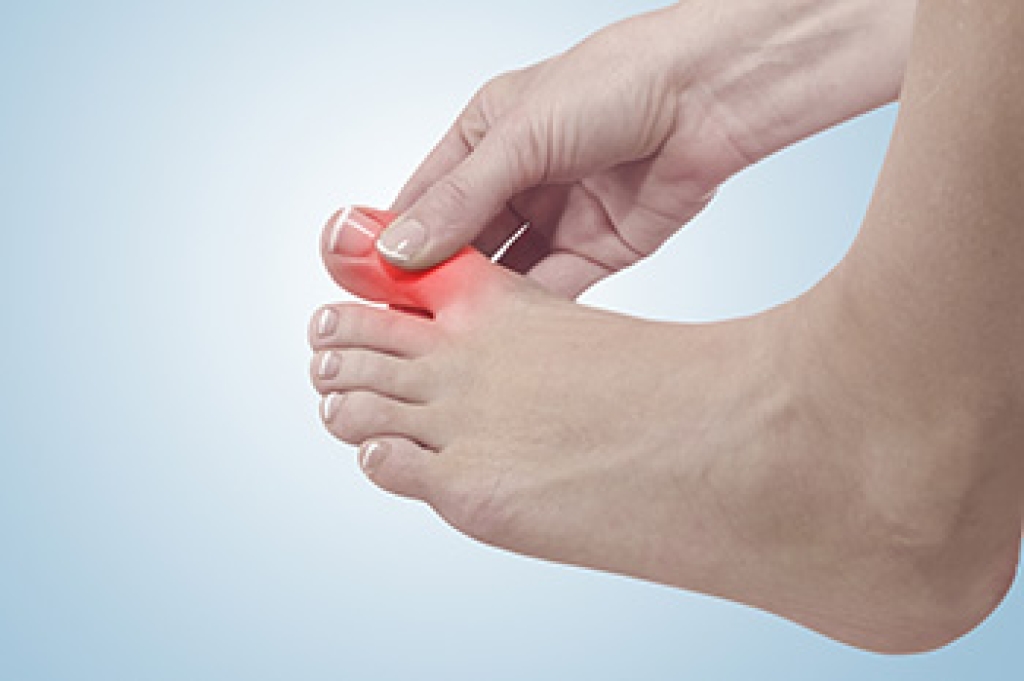
Gout is a form of arthritis that is characterized by sudden, severe attacks of pain, redness, and tenderness in the joints. The condition usually affects the joint at the base of the big toe. A gout attack can occur at any random time, such as the middle of the night while you are asleep.

Symptoms

  • Intense Joint Pain - Usually around the large joint of your big toe, and it most severe within the first four to twelve hours
  • Lingering Discomfort - Joint discomfort may last from a few days to a few weeks
  • Inflammation and Redness -Affected joints may become swollen, tender, warm and red
  • Limited Range of Motion - May experience a decrease in joint mobility

Risk Factors

  • Genetics - If family members have gout, you’re more likely to have it
  • Medications - Diuretic medications can raise uric acid levels
  • Gender/Age - Gout is more common in men until the age of 60. It is believed that estrogen protects women until that point
  • Diet - Eating red meat and shellfish increases your risk
  • Alcohol - Having more than two alcoholic drinks per day increases your risk
  • Obesity - Obese people are at a higher risk for gout

Prior to visiting your podiatrist to receive treatment for gout, there are a few things you should do beforehand. If you have gout you should write down your symptoms--including when they started and how often you experience them, important medical information you may have, and any questions you may have. Writing down these three things will help your podiatrist in assessing your specific situation so that he or she may provide the best route of treatment for you.

If you have any questions, please feel free to contact our office located in Passaic, NJ . We offer the newest diagnostic and treatment technologies for all your foot care needs.

Read more about Gout

Get Professional Care for a Broken Foot or Ankle

Constant care and regular evaluation are important for a foot or ankle fracture. If left untreated, foot or ankle fractures can worsen over time and create more serious problems.

Don't wait to be examined if you believe you've experienced a foot or ankle fracture.

Foot Stretches During Pregnancy

There are numerous tendons, ligaments, muscles, and bones in each foot that endure pounds of pressure as each step is taken. Pregnant women often notice their feet are swollen a majority of the time, and this may be a result of the added weight gained during pregnancy. Additionally, hormonal changes that occur can contribute to weight gain and swollen feet. Many pregnant women buy larger shoes that can provide stability, cushioning, and comfort. It can be beneficial to exercise and stretch the feet, helping to provide much needed relief from foot pain. Some women find it helps to roll a bag of golf balls on their feet, which can mimic a massage. Additionally, an effective stretch for the sole of the feet is standing on a step and lowering one heel at a time until a gentle stretch is felt. If you would like more information about specific foot stretches to perform during your pregnancy, please speak with a podiatrist.

Pregnant women with swollen feet can be treated with a variety of different methods that are readily available. For more information about other cures for swollen feet during pregnancy, consult with Anas Khoury, DPM from North Eastern Foot & Ankle Specialists. Our doctor will attend to all of your foot and ankle needs.

What Foot Problems Can Arise During Pregnancy?

One problem that can occur is overpronation, which occurs when the arch of the foot flattens and tends to roll inward.  This can cause pain and discomfort in your heels while you’re walking or even just standing up, trying to support your baby.  

Another problem is edema, or swelling in the extremities. This often affects the feet during pregnancy but tends to occur in the later stages. 

How Can I Keep My Feet Healthy During Pregnancy?

  • Wearing orthotics can provide extra support for the feet and help distribute weight evenly
  • Minimize the amount of time spent walking barefoot
  • Wear shoes with good arch support
  • Wear shoes that allow for good circulation to the feet
  • Elevate feet if you experience swelling
  • Massage your feet
  • Get regular, light exercise, such as walking, to promote blood circulation to the feet

If you have any questions, please feel free to contact our office located in Passaic, NJ . We offer the newest diagnostic and treatment technologies for all your foot care needs.

Read more about Pregnancy and Foot Health

Athletes and Plantar Fasciitis

The thick band of tissue that is found on the sole of the foot is known as the plantar fascia. It connects the heel to the toes, and acts as a shock absorber, in addition to providing support to the arch. When the plantar fascia becomes irritated, plantar fasciitis may develop. This can cause pain and discomfort, and the pain may be more severe in the morning after arising. Athletes who develop this condition are often unhappy about it, and it may limit running. It can help to wear supportive footwear, and many athletes gradually increase training. There are specific stretches that can be performed which can help the symptoms of plantar fasciitis. If you would like more information about the causes and treatment of plantar fasciitis, please consult with a podiatrist.

Plantar fasciitis can be very painful and inconvenient. If you are experiencing heel pain or symptoms of plantar fasciitis, contact Anas Khoury, DPM  from North Eastern Foot & Ankle Specialists. Our doctor can provide the care you need to keep you pain-free and on your feet.

What Is Plantar Fasciitis?

Plantar fasciitis is the inflammation of the thick band of tissue that runs along the bottom of your foot, known as the plantar fascia, and causes mild to severe heel pain.

What Causes Plantar Fasciitis?

  • Excessive running
  • Non-supportive shoes
  • Overpronation
  • Repeated stretching and tearing of the plantar fascia

How Can It Be Treated?

  • Conservative measures – anti-inflammatories, ice packs, stretching exercises, physical therapy, orthotic devices
  • Shockwave therapy – sound waves are sent to the affected area to facilitate healing and are usually used for chronic cases of plantar fasciitis
  • Surgery – usually only used as a last resort when all else fails. The plantar fascia can be surgically detached from the heel

While very treatable, plantar fasciitis is definitely not something that should be ignored. Especially in severe cases, speaking to your doctor right away is highly recommended to avoid complications and severe heel pain. Your podiatrist can work with you to provide the appropriate treatment options tailored to your condition.

If you have any questions, please feel free to contact our office located in Passaic, NJ . We offer the newest diagnostic and treatment technologies for all your foot care needs.

Read more about Plantar Fasciitis

Connect With Us