Hablamos Español

Musculoskeletal Problems in Rheumatoid Arthritis

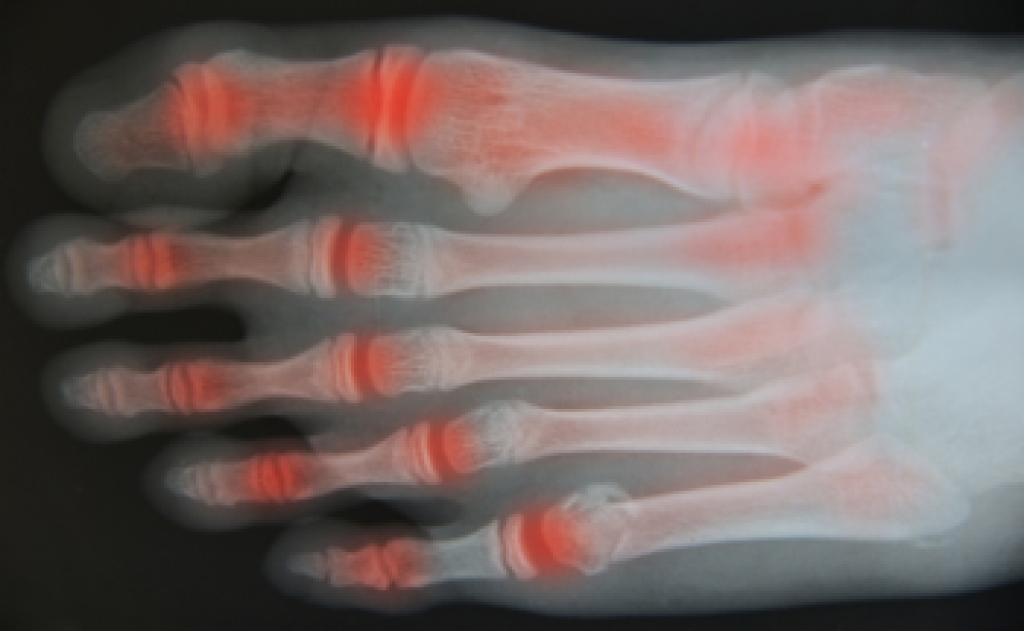
Rheumatoid arthritis (RA) is an autoimmune disease in which the body’s own immune system attacks and destroys otherwise healthy cells in the lining of the joints. There are several groups of joints in the lower limbs that are frequently affected by RA. The interphalangeal joints, which are located between the bones that make up the toes, and the metatarsophalangeal joints, which connect your toe bones to the rest of your foot, can become stiff, swollen, and inflamed. Hammertoes or claw toes may develop over time, keeping the toes bent at uncomfortable angles. The subtalar joint, located between the heel bone and the bone that connects your foot to your leg, and the ankle joints, can also become stiff, restricting the range of motion in your feet and ankles. If you have RA, it is suggested that you seek the ongoing care of a podiatrist.

Because RA affects more than just your joints, including the joints in your feet and ankles, it is important to seek early diagnosis from your podiatrist if you feel like the pain in your feet might be caused by RA. For more information, contact Anas Khoury, DPM of North Eastern Foot & Ankle Specialists. Our doctor will assist you with all of your podiatric concerns.

What Is Rheumatoid Arthritis?

Rheumatoid Arthritis (RA) is an autoimmune disorder in which the body’s own immune system attacks the membranes surrounding the joints. Inflammation of the lining and eventually the destruction of the joint’s cartilage and bone occur, causing severe pain and immobility.

Rheumatoid Arthritis of the Feet

Although RA usually attacks multiple bones and joints throughout the entire body, almost 90 percent of cases result in pain in the foot or ankle area.

Symptoms

  • Swelling and pain in the feet
  • Stiffness in the feet
  • Pain on the ball or sole of feet
  • Joint shift and deformation

Diagnosis

Quick diagnosis of RA in the feet is important so that the podiatrist can treat the area effectively. Your doctor will ask you about your medical history, occupation, and lifestyle to determine the origin of the condition. Rheumatoid Factor tests help to determine if someone is affected by the disease.

If you have any questions, please feel free to contact our office located in Passaic, NJ . We offer the newest diagnostic and treatment technologies for all your foot care needs.

Read more about Rheumatoid Arthritis in the Feet

What Are the Treatments for Tarsal Tunnel Syndrome?

Tarsal tunnel syndrome is a condition caused by compression of the posterior tibial nerve, which runs through a canal near the heel and into the sole of the foot. When the posterior tibial nerve is compressed, symptoms such as foot and ankle pain, burning, tingling, and numbness can arise. This condition is typically treated through conservative methods. These include resting and icing the affected foot, taking over-the-counter pain medications, wearing orthotics, immobilizing the foot, physical therapy, and steroid injections. In severe cases where conservative treatments have failed, decompression surgery may be needed. To learn more about tarsal tunnel syndrome, please seek the care of a podiatrist.

Tarsal tunnel syndrome can be very uncomfortable to live with. If you are experiencing tarsal tunnel syndrome, contact Anas Khoury, DPM of North Eastern Foot & Ankle Specialists. Our doctor can provide the care you need to keep you pain-free and on your feet.

Tarsal Tunnel Syndrome

Tarsal tunnel syndrome, which can also be called tibial nerve dysfunction, is an uncommon condition of misfiring peripheral nerves in the foot. The tibial nerve is the peripheral nerve in the leg responsible for sensation and movement of the foot and calf muscles. In tarsal tunnel syndrome, the tibial nerve is damaged, causing problems with movement and feeling in the foot of the affected leg.

Common Cause of Tarsal Tunnel Syndrome

  • Involves pressure or an injury, direct pressure on the tibial nerve for an extended period of time, sometimes caused by other body structures close by or near the knee.
  • Diseases that damage nerves, including diabetes, may cause tarsal tunnel syndrome.
  • At times, tarsal tunnel syndrome can appear without an obvious cause in some cases.

The Effects of Tarsal Tunnel Syndrome

  • Different sensations, an afflicted person may experience pain, tingling, burning or other unusual sensations in the foot of the affected leg.
  • The foot muscles, toes and ankle become weaker, and curling your toes or flexing your foot can become difficult.
  • If condition worsens, infections and ulcers may develop on the foot that is experiencing the syndrome.

A physical exam of the leg can help identify the presence of tarsal tunnel syndrome. Medical tests, such as a nerve biopsy, are also used to diagnose the condition. Patients may receive physical therapy and prescriptive medication. In extreme cases, some may require surgery.

If you have any questions please contact our office located in Passaic, NJ . We offer the newest diagnostic and treatment technologies for all your foot and ankle needs.

Read more about Tarsal Tunnel Syndrome

How Do Stress Fractures Form?

Stress fractures are thin, tiny cracks in a bone. They occur when a bone is unable to bear the load or stress placed on it. Your bones, like any other part of your body, are living tissues that are constantly rebuilding and repairing themselves in response to the loads placed on them. These processes are what allow bones to heal following an injury, and to grow stronger or weaker depending on the demands of your daily life. When the load placed on a bone is greater than the bone’s ability to adapt to that load, the bone can crack. This is often preceded by swelling in the affected area. The foot bones that are most likely to sustain a stress fracture are the metatarsal bones, the heel bone, and navicular bone. If you suspect that you may have a stress fracture in your foot, please seek the care of a podiatrist as soon as possible. 

Activities where too much pressure is put on the feet can cause stress fractures. To learn more, contact Anas Khoury, DPM from North Eastern Foot & Ankle Specialists. Our doctor can provide the care you need to keep your pain free and on your feet.

Dealing with Stress Fractures of the Foot and Ankle

Stress fractures occur in the foot and ankle when muscles in these areas weaken from too much or too little use.  The feet and ankles then lose support when walking or running from the impact of the ground. Since there is no protection, the bones receive the full impact of each step. Stress on the feet can cause cracks to form in the bones, thus creating stress fractures.

What Are Stress Fractures?

Stress fractures occur frequently in individuals whose daily activities cause great impact on the feet and ankles. Stress factors are most common among:

  • Runners                                
  • People affected with Osteoporosis
  • Tennis or basketball players
  • Gymnasts
  • High impact workouts

Symptoms

Pain from the fractures occur in the area of the fractures and can be constant or intermittent. It will often cause sharp or dull pain with swelling and tenderness. Engaging in any kind of activity which involves high impact will aggravate pain.

If you have any questions please contact our office located in Passaic, NJ . We offer the newest diagnostic and treatment technologies for all your foot and ankle needs.

Read more about Dealing with Stress Fractures of the Foot and Ankle

Connect With Us