Foot or ankle pain can negatively affect your day-to-day life and can occur due to several different conditions. Pain can also be an indicator of a more serious underlying condition, which is why you should seek professional help as soon as you notice any abnormalities in your feet.
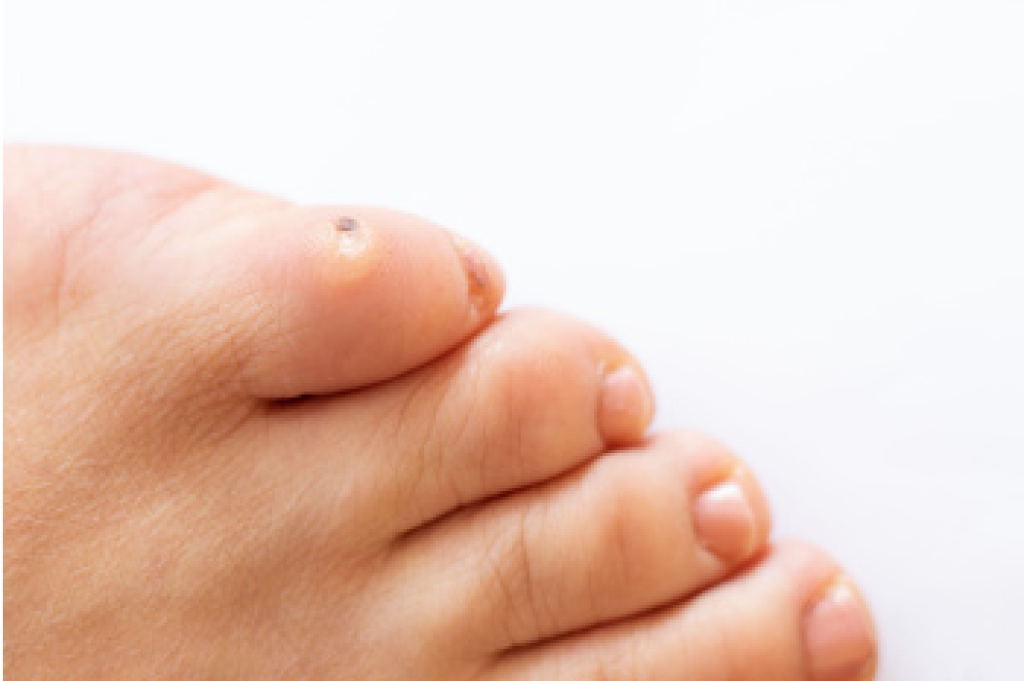
Corns are identified as patches of thickened skin and are a common foot problem that can cause discomfort and pain if left untreated. Understanding different types of corns can help in effectively managing and preventing them. Hard corns, the most prevalent type, typically develop on the tops and sides of toes or weight-bearing areas of the foot. These corns are compact and dense, often caused by friction or pressure from wearing ill-fitting shoes or repetitive motion. Conversely, soft corns tend to form between toes where sweat and moisture accumulate. These corns are softer in texture and can be more painful due to increased moisture levels. Finally, seed corns are tiny, discrete corns that often appear on the bottom of the foot. They are generally painless but can cause discomfort when walking. If you have a corn on your foot, it is suggested that you consult a podiatrist who can identify which type it is, and offer you correct treatment solutions.
Corns can make walking very painful and should be treated immediately. If you have questions regarding your feet and ankles, contact Anas Khoury, DPM of North Eastern Foot & Ankle Specialists. Our doctor will treat your foot and ankle needs.
Corns: What Are They? And How Do You Get Rid of Them? Corns are thickened areas on the skin that can become painful. They are caused by excessive pressure and friction on the skin. Corns press into the deeper layers of the skin and are usually round in shape.
Ways to Prevent Corns There are many ways to get rid of painful corns such as:
Wearing properly fitting shoes that have been measured by a professional
Wearing shoes that are not sharply pointed or have high heels
Wearing only shoes that offer support
Treating Corns
Although most corns slowly disappear when the friction or pressure stops, this isn’t always the case. Consult with your podiatrist to determine the best treatment option for your case of corns.
If you have any questions, please feel free to contact our office located in Passaic, NJ. We offer the newest diagnostic and treatment technologies for all your foot care needs.
Rain or shine, snow or sleet, Custom Orthotics have your feet covered! As the seasons change, ensure your steps remain comfortable and supported. Custom Orthotics adapt to your footwear, from summer sandals to winter boots, providing consistent relief and alignment. Don't let the changing weather dictate your foot comfort. Step confidently year-round and experience the difference with Custom Orthotics. Call today for more information.
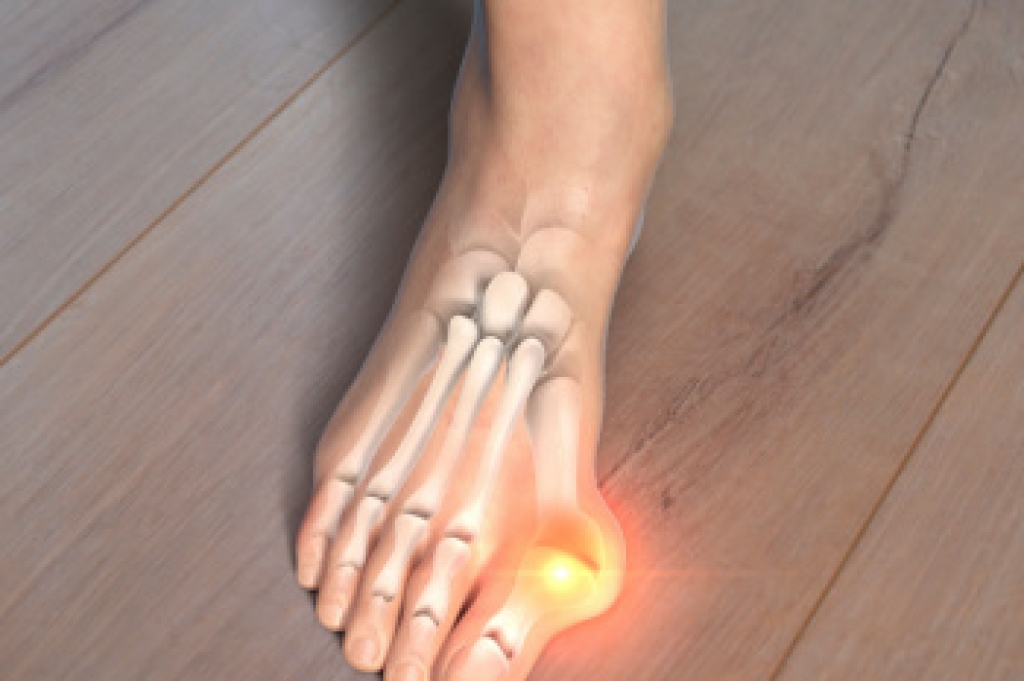
A bunion, medically termed hallux valgus, is a bony bump that forms at the base of the big toe. This condition develops when the big toe pushes against the adjacent toe, causing the joint to protrude outward. Bunions can result from various factors, including genetics, wearing tight or ill-fitting shoes, and foot injuries. Individuals with certain foot types, such as flat feet or low arches, are more prone to developing bunions. Additionally, occupations or activities that involve repetitive stress on the feet can increase the risk. Bunions are a relatively common foot ailment, affecting millions of people worldwide, with women being more susceptible than men as a result of wearing high heels or narrow shoes that can worsen the condition. While bunions may initially cause mild discomfort, they can progressively worsen, leading to pain, inflammation, and difficulty walking. A bunion can be uncomfortable, and a podiatrist can offer you effective relief strategies. If you have this condition, it is suggested that you consult this type of doctor who can offer appropriate treatment methods.
Bunions are painful bony bumps that usually develop on the inside of the foot at the joint of the big toe. As the deformity increases over time, it may become painful to walk and wear shoes. Women are more likely to exacerbate existing bunions since they often wear tight, narrow shoes that shift their toes together. Bunion pain can be relieved by wearing wider shoes with enough room for the toes.
Causes
Genetics – some people inherit feet that are more prone to bunion development
Inflammatory Conditions - rheumatoid arthritis and polio may cause bunion development
Symptoms
Redness and inflammation
Pain and tenderness
Callus or corns on the bump
Restricted motion in the big toe
In order to diagnose your bunion, your podiatrist may ask about your medical history, symptoms, and general health. Your doctor might also order an x-ray to take a closer look at your feet. Nonsurgical treatment options include orthotics, padding, icing, changes in footwear, and medication. If nonsurgical treatments don’t alleviate your bunion pain, surgery may be necessary.
If you have any questions, please feel free to contact our office located in Passaic, NJ. We offer the newest diagnostic and treatment technologies for all your foot care needs.
Foot orthotic assessment, particularly for custom orthotics, is an important step in addressing various foot conditions and promoting optimal foot health. Custom orthotics may be necessary to correct biomechanical abnormalities, provide support, and alleviate pain associated with conditions like plantar fasciitis, flat feet, or arthritis. When assessing for custom orthotics, podiatrists consider important joints in the foot, such as the subtalar, midtarsal, and metatarsophalangeal joints. These joints play a significant role in foot function and alignment, making them key areas for orthotic intervention. The assessment process involves an examination of foot structure, gait analysis, and identification of specific areas of concern or dysfunction. Podiatrists work closely with patients to develop personalized orthotic solutions tailored to their individual needs and conditions. If you are experiencing foot pain or discomfort, a professional assessment from a podiatrist is suggested to determine if custom orthotics are the right treatment option for you.
Custom orthotics can be an important solution for reducing foot pain by targeting its structural causes rather than just the symptoms. When the feet are misaligned, excess strain develops in the muscles, tendons, and ligaments, often resulting in discomfort in the arches, balls of the feet, or toes. Orthotics are designed to match each foot’s natural shape, supporting proper alignment and evenly distributing pressure to ease pain and improve movement.
Foot pain is commonly caused by overuse, wearing improper footwear, or biomechanical issues that place added stress on sensitive areas. By stabilizing the foot and restoring natural motion, custom orthotics help reduce strain, calm inflammation, and promote healing. Many patients experience lasting relief and greater comfort while walking, standing, or exercising.
Created from a detailed assessment using advanced imaging or casting, each pair of orthotics is tailored to your individual needs. If you are experiencing ongoing foot pain, it is suggested that you contact our office for an evaluation and treatment.
If you have any questions, please feel free to contact our office located in Passaic, NJ.